The Sea of Cortez rewards patience. Its desert coastline, rocky reefs and pelagic life create memorable days in the water, while changing wind, visibility and temperature remind every freediver to stay adaptable.
Where desert meets a living sea
The Gulf of California extends along the eastern side of the Baja peninsula. From Ocean Tigers’ base in Cabo San Lucas, freedivers can experience sheltered coastal water, rocky formations and open-water training while remaining close to the Pacific transition zone.
This is an experience-led destination rather than a promise of perfect conditions. The most rewarding plan leaves room for the ocean to decide which site makes sense.
Cabo San Lucas and southern Baja
Cabo is a practical gateway to southern Baja California Sur. Local bays can suit relaxed exploration and skill practice, while boat access opens different terrain and training possibilities.
The region also requires sound judgment. Wind can build, boat traffic matters and protected-area rules may affect access. A local briefing is useful even for experienced travelers.
Cabo local guide
Review the area’s principal sites, safety considerations and marine life.
Explore Cabo →Freediving courses
See the progression from beginner certification to advanced and professional training.
Explore training in Mexico →Visibility and water temperature
Visibility is variable rather than guaranteed. Swell, wind, plankton, current and the chosen site can all influence what a diver sees on a particular day.
Water temperature also changes by season and location. Instead of relying on one annual figure, confirm current conditions and bring exposure protection appropriate for repeated breath-hold sessions. Ocean Tigers confirms equipment needs before booked training.
Seasons shape the experience
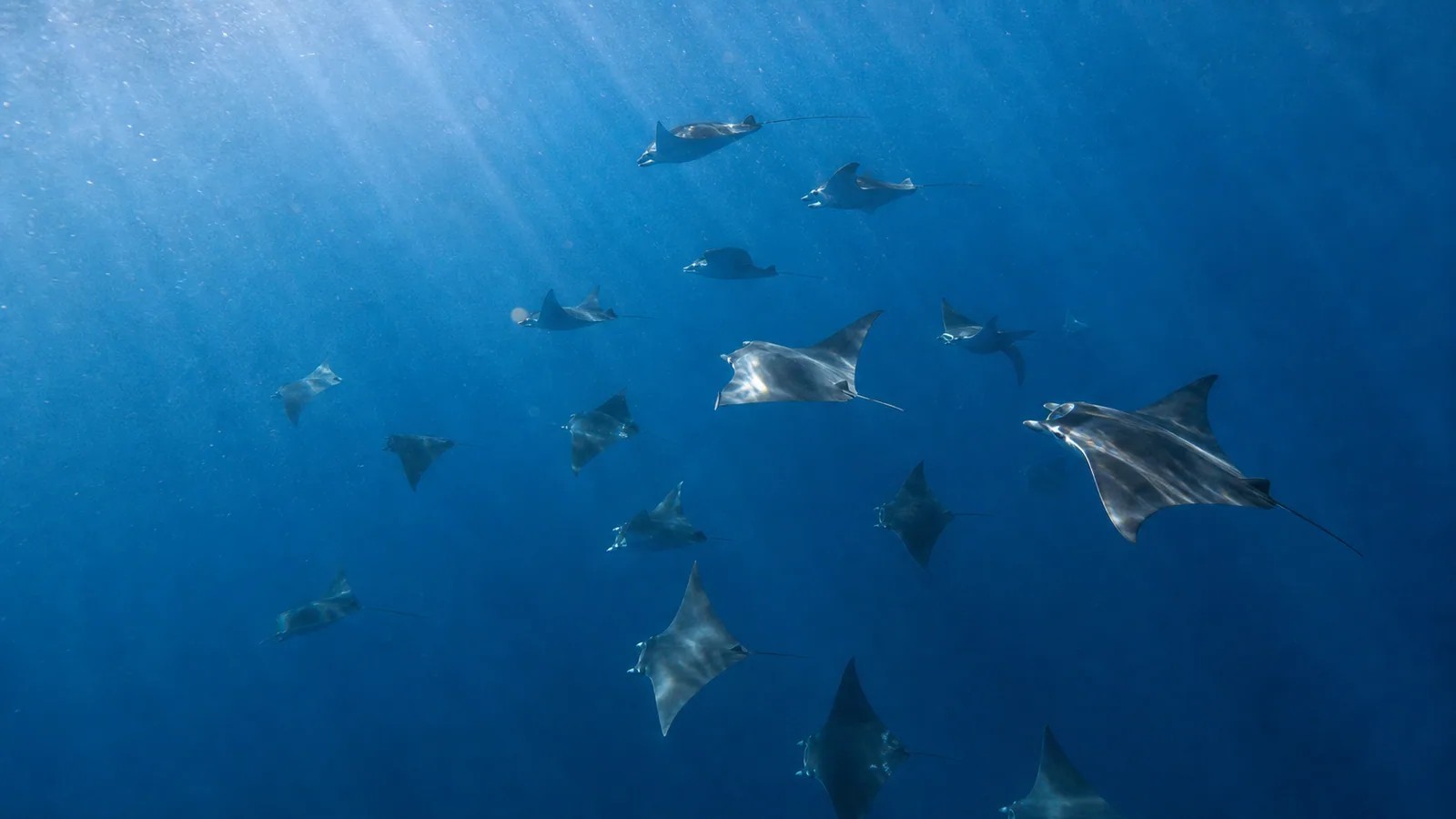
Winter is associated with humpback whales around Los Cabos. Late spring into early summer is known for larger mobula aggregations. Summer and fall often feel warmer, while seasonal weather remains an important planning factor.
These are broad patterns, not an encounter calendar. A flexible itinerary and a reliable forecast are more useful than choosing a date around one guaranteed animal.
When should you come?
A practical comparison of broad seasonal conditions for Cabo freediving.
Read the seasonal guide →Marine life, without guarantees
Mobula rays, sea turtles, California sea lions and spotted eagle rays are among the animals associated with Baja waters. Seasonal visitors add another dimension to the region.
Responsible encounters mean keeping distance, avoiding pursuit or contact, respecting regulations and following the guidance of authorized operators. Sometimes the best decision is to observe from the surface or not enter the water at all.
Snorkeling and freediving are different tools
Snorkeling keeps the visitor at the surface and can be ideal for relaxed observation. Freediving adds breath-hold dives, equalization, efficient movement and a specific buddy system.
A strong swimmer is not automatically a trained freediver. A course teaches the safety habits and technique needed to explore below the surface with greater awareness.
Open-water training in the Sea of Cortez
Structured line sessions focus on relaxation, equalization, body position, finning and a calm return to the surface. The objective determines the site and session—not the other way around.
Certified freedivers can use coaching to work on a specific limitation. Beginners should start with progressive instruction before treating depth as a target.
Start with AIDA 2
Build the essential theory, confined-water and open-water skills of a certified freediver.
AIDA 2 details →Train with coaching
Plan a focused session around technique, equalization, confidence or progression.
Coaching details →How to prepare for a Baja water day
Bring sun protection, water, a towel and the exposure protection confirmed for your activity. Avoid heavy meals immediately before training and arrive rested and hydrated.
Your instructor will explain the plan, site-specific risks and equipment. If conditions do not support the intended session, changing the location or objective is a professional decision—not a failed day.