Mexico offers far more than a beautiful backdrop. Around southern Baja California Sur, pool access, sheltered bays and open water create a useful progression from first breathing exercises to advanced depth training.
Why learn freediving in Mexico?
A good freediving destination needs more than clear water. Students need a calm place to learn theory, controlled water for skills, suitable open-water access and instructors who adapt the plan to real conditions. Cabo combines these elements within one compact base.
Travelers can begin with a discovery experience, complete an AIDA certification or use their time in Baja for focused coaching. The course remains the priority; the landscape and marine life make the days around it memorable.
Why Cabo San Lucas is a strong base
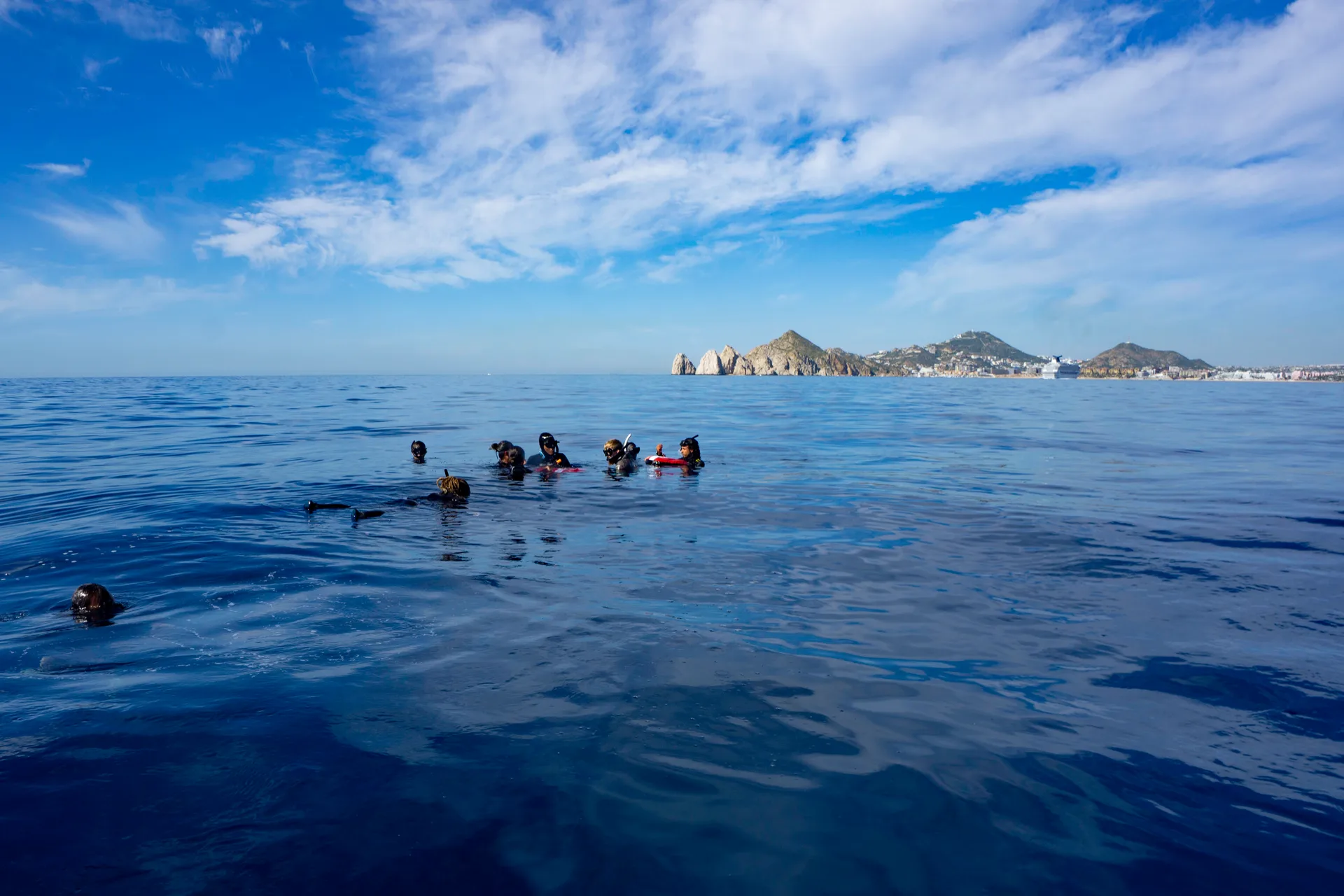
Cabo sits at the meeting point of the Pacific Ocean and the Gulf of California. Sheltered coves, pool facilities and boat-access training areas allow an instructor to choose a setting that matches the student and the day.
Conditions are not identical every morning. Wind, swell, visibility, currents and boat traffic are assessed before an ocean session. That flexibility is part of local freediving, not an inconvenience to ignore.
Explore Cabo
Local sites, marine life, seasons and practical safety considerations.
Read the Cabo guide →Explore the Sea of Cortez
A destination-focused guide to Baja’s water, wildlife and open-water experience.
Read the destination guide →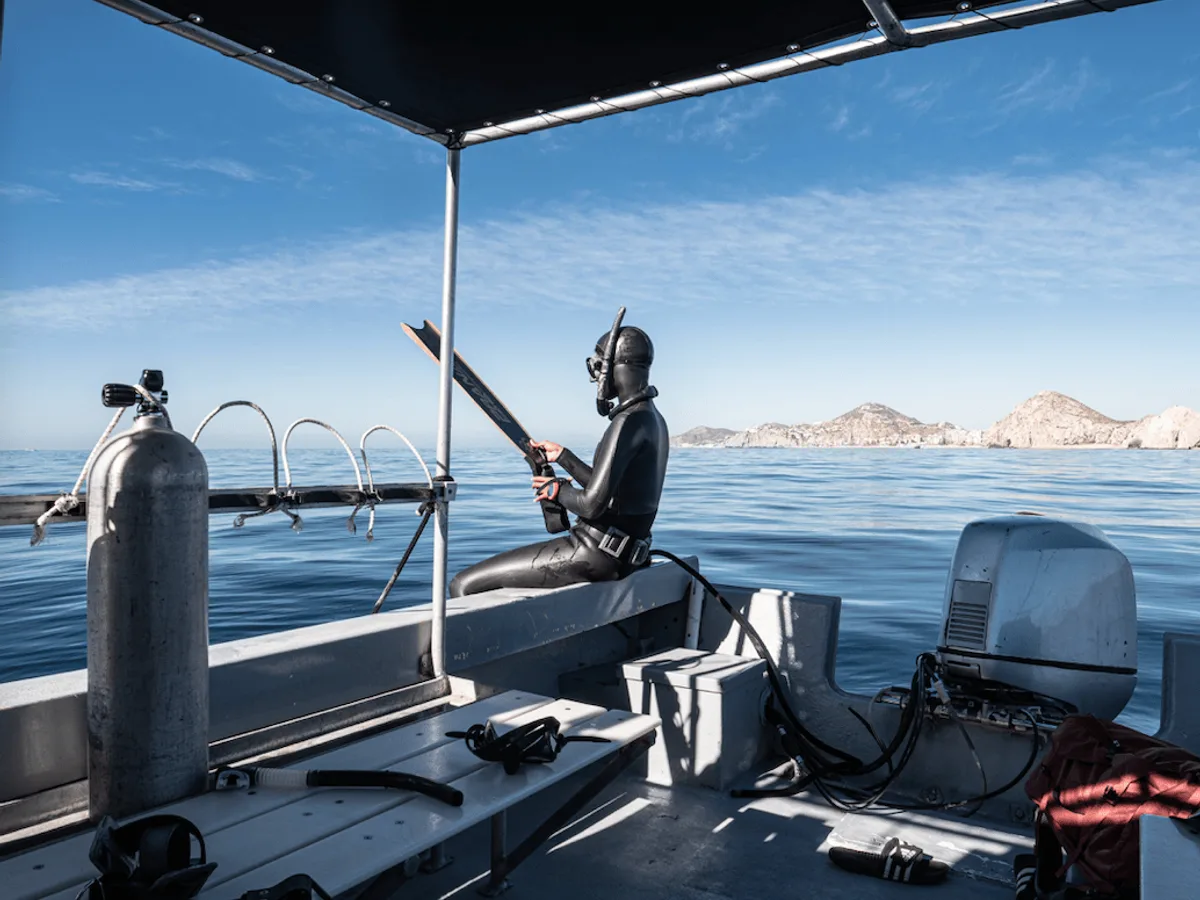
Freediving conditions in Baja California Sur
Water temperature and visibility change through the year and can also vary between nearby sites. Exposure protection should therefore be chosen for the planned session rather than from a fixed annual promise.
The same principle applies to depth: a protected beginner session and an advanced line-training day do not need the same site. Ocean Tigers confirms the location, equipment and logistics before the course.
AIDA freediving courses in Mexico
AIDA education builds skills progressively: breathing and relaxation, efficient movement, equalization, buddying, rescue and open-water technique. Certification is earned by meeting the requirements of the relevant level, not simply by attending.
Beginner freediving
AIDA 2 is the main entry into a complete freediving certification, with theory, confined-water skills and open-water practice.
See AIDA 2 →Advanced progression
AIDA 3 develops technique, safety, planning and greater independence for already-certified freedivers.
See AIDA 3 →Master-level training
AIDA 4 is designed for experienced freedivers ready for deeper knowledge, stronger safety skills and demanding performance standards.
See AIDA 4 →Personal coaching
Coaching focuses the session on an individual goal such as equalization, technique, confidence or training structure.
See coaching →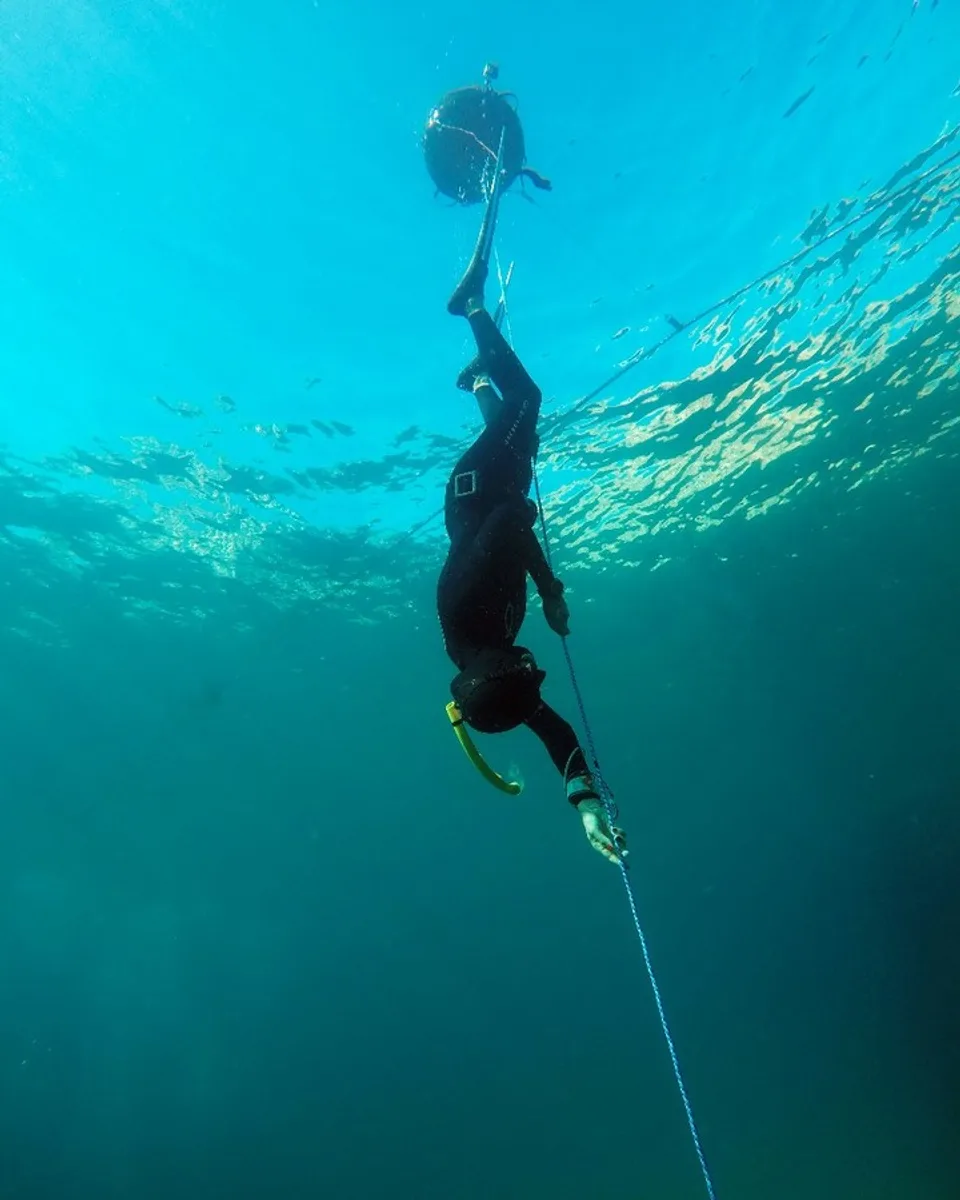
Instructor-level programs
Freedivers considering a professional path can continue toward AIDA instructor education or, when eligible, an instructor crossover. These programs require established ability and prerequisites; they are not shortcuts from beginner level.
AIDA Instructor
Professional education for qualified freedivers preparing to teach within the AIDA system.
Instructor program →Instructor Crossover
A route for eligible instructors from another recognized freediving education system.
Crossover details →Sea of Cortez marine life
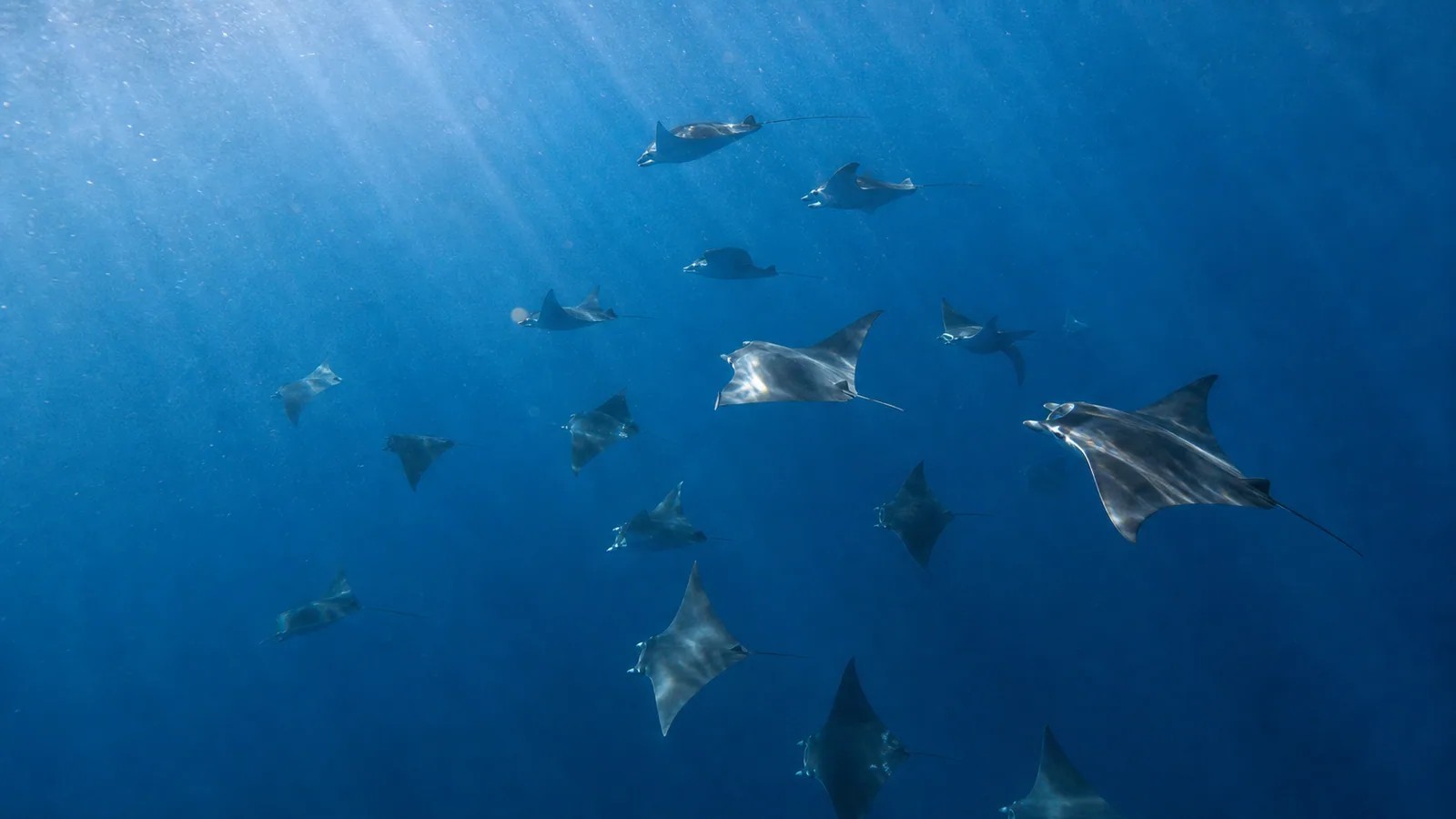
Southern Baja is known for rays, turtles, sea lions and seasonal visitors. Encounters are never guaranteed and should never replace a training plan or safe buddy procedure.
Wildlife is approached respectfully, with distance and attention to protected-area rules. A good session can be valuable even when the ocean chooses not to deliver a spectacular encounter.
Best time of year for freediving in Cabo
Freediving is possible throughout the year, but there is no single best month for every visitor. Winter is associated with humpback whale season; late spring and early summer are known for larger mobula aggregations; warmer-water periods can still be affected by seasonal weather.
Choose travel dates around your main goal, then keep the daily plan flexible. Our dedicated seasonal guide explains the trade-offs without pretending that ocean conditions follow a fixed calendar.
Seasonal planning
Compare broad seasonal patterns for beginners, training, wildlife and equipment.
Read the seasonal guide →Safety and professional instruction
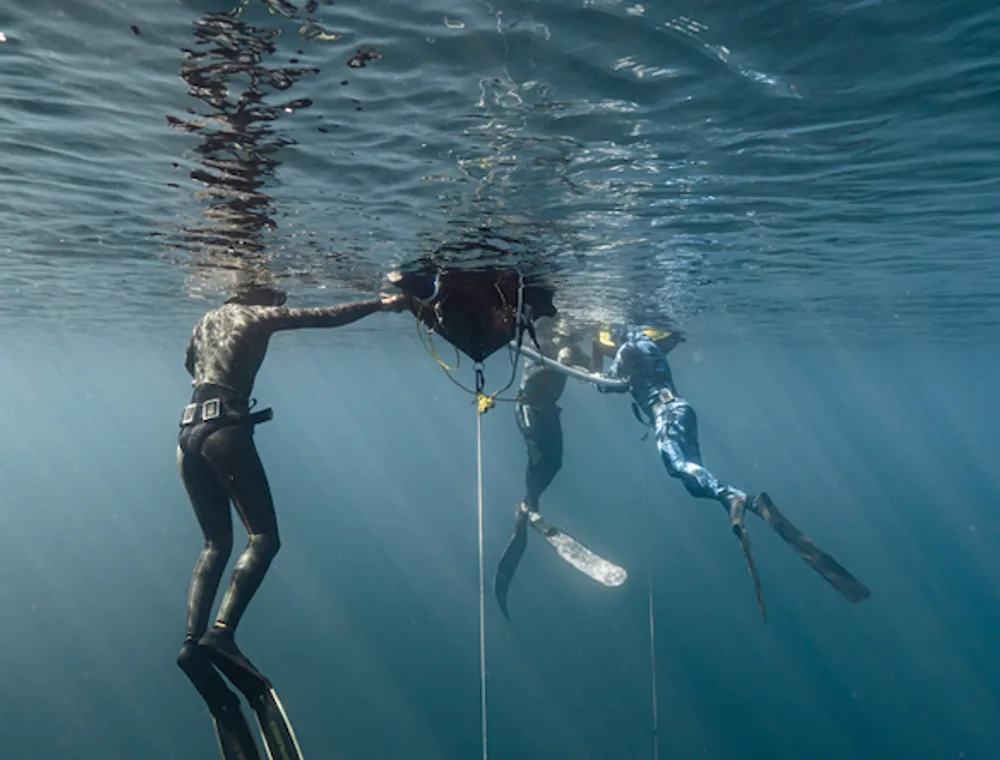
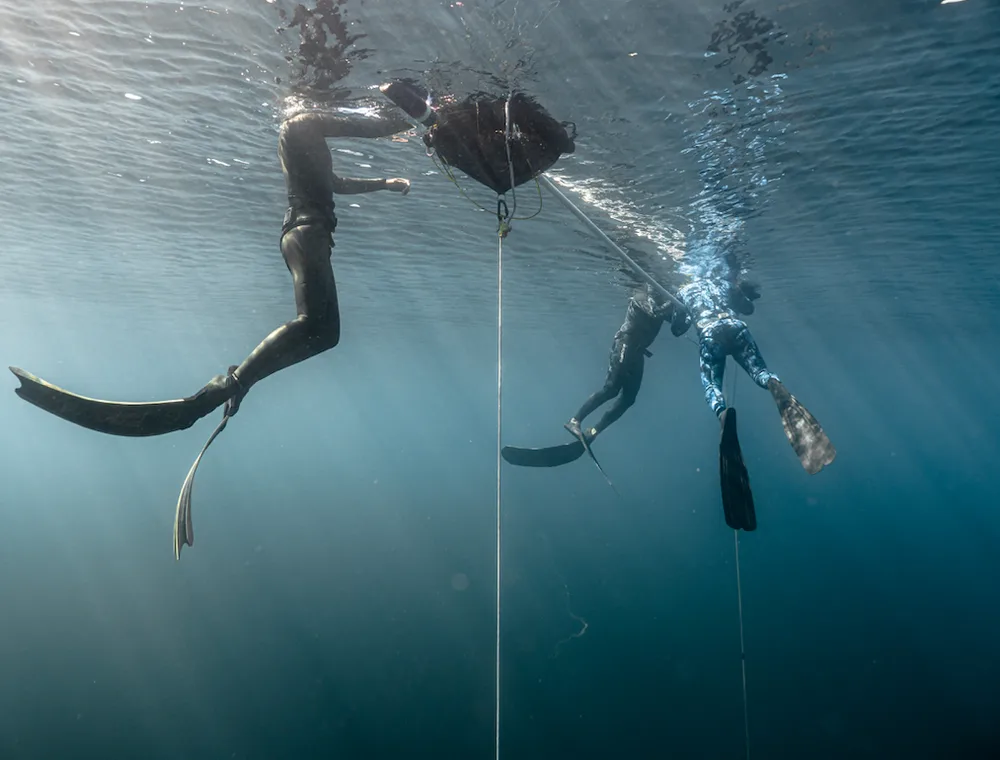
Never freedive alone. Effective supervision requires an attentive buddy who understands the dive, watches the final ascent and can respond at the surface. Depth training also calls for a visible buoy, suitable line system and clear session protocol.
Professional instruction adds structure, feedback and rescue practice, but students still learn to make conservative decisions. Progress is measured through technique and consistency—not by forcing a number on a difficult day.